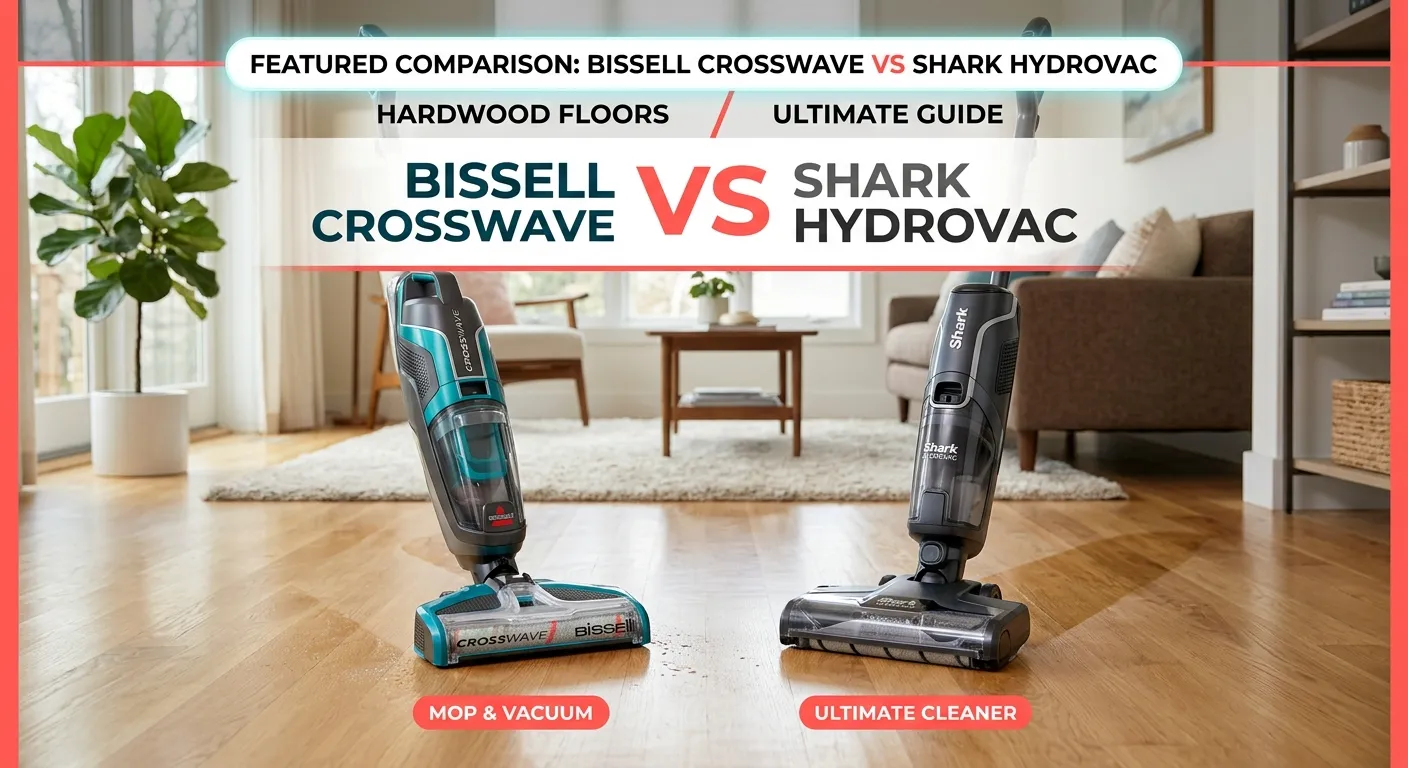
Bissell CrossWave or Shark HydroVac for hardwood floors?

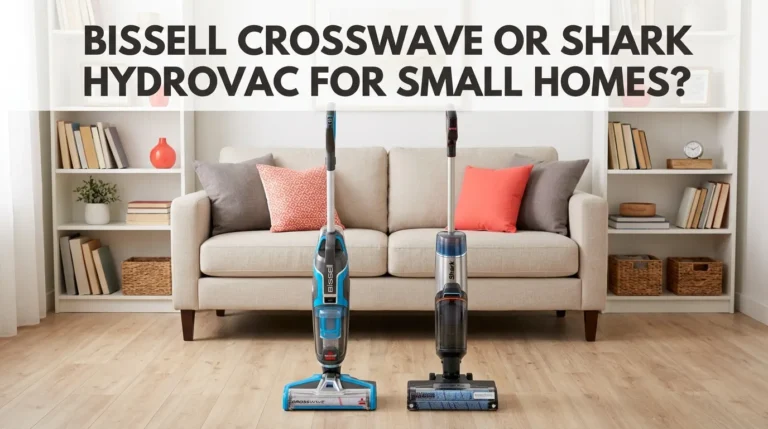
For sealed hardwood floors, both the Bissell CrossWave and Shark HydroVac can vacuum and wash in one pass without requiring a separate mop. The CrossWave is the better choice if you want more control over cleaning and, on many models, vacuum-only use. The HydroVac is appealing if you prefer automatic solution dispensing and a simple self-cleaning system.
Bissell CrossWave vs. Shark HydroVac for Hardwood Floors
The first thing to understand is that neither machine is meant for every type of wood floor. Both brands specify their relevant machines for sealed hard floors, including sealed hardwood. Unsealed or unfinished wood should not be treated like a sealed floor because excess moisture can damage it.
| Feature | Bissell CrossWave | Shark HydroVac |
|---|---|---|
| Sealed hardwood | Yes | Yes |
| Vacuums and washes | Yes | Yes |
| Wet and dry messes | Yes | Yes |
| Separate clean/dirty tanks | Yes | Yes |
| Self-cleaning | Available on many models | Yes on HydroVac models |
| Vacuum-only option | Available on some CrossWave models | Depends on model; classic HydroVac does not offer the same vacuum-only flexibility |
| Area rugs | Many models | Yes |
| Cleaning solution | Bissell formula options | Shark HydroVac concentrate |
| Edge cleaning | Depends on CrossWave model | Depends on HydroVac model |
| Cordless options | Yes | Yes |
| Best for | Control and versatility | Simple, hands-off floor cleaning |
The exact features vary by generation, so it is worth checking the specific model number rather than assuming every CrossWave or HydroVac works the same way.
Why the CrossWave stands out on hardwood
The CrossWave family has been built around vacuuming and washing hard floors at the same time. Bissell says its original CrossWave is safe for sealed hardwood and other sealed hard surfaces, while newer models add features such as edge cleaning, cordless operation, or specialized brush rolls.
One useful advantage is cleaning control. On the original CrossWave, for example, the solution is controlled with a spray trigger, so you can apply additional moisture and cleaning solution when dealing with a stubborn spot. The machine can also operate in vacuum-only mode.
That can be helpful on hardwood because you generally want to avoid leaving unnecessary moisture on the floor.
Why the HydroVac stands out on hardwood
The Shark HydroVac takes a more automated approach. It combines vacuuming and mopping, uses separate clean and dirty water tanks, and includes a self-cleaning system on current HydroVac models such as the HydroVac MessMaster. Shark lists sealed hardwood, tile, marble, and laminate among its compatible hard-floor surfaces.
The HydroVac also uses an antimicrobial brush roll on compatible models. Shark says the treatment is designed to help preserve the roller and resist bacterial odors; it should not be confused with protection against disease-causing organisms.
For someone who wants to finish cleaning and let the machine handle much of its own rinse process, that can be a meaningful advantage.
Which Is Better for Sealed Hardwood Floors?
For most hardwood-floor owners, I would give the edge to the Bissell CrossWave if floor-care control is the priority, and the Shark HydroVac if convenience is the priority.
The difference is less about whether either machine can clean hardwood. Both can handle sealed hardwood when used as directed. The more important question is how you want to clean it.
Choose the CrossWave if you want:
- More control over how much solution you apply
- Vacuum-only capability on supported models
- A wider range of CrossWave configurations
- Options designed around pet hair or edge cleaning
- A machine that can also refresh area rugs
Choose the HydroVac if you want:
- A straightforward vacuum-and-mop routine
- Automatic cleaning solution delivery
- A self-cleaning brush roll and rinse system
- Strong handling of everyday wet and dry messes
- Less need to think about when to apply cleaning solution
Independent testing of the Shark HydroVac XL found that it performed well on hardwood and other floor types, while comparison testing against the Bissell CrossWave highlighted the CrossWave’s spray-trigger control and vacuum-only mode as notable differences.
How They Handle Everyday Hardwood Messes
Hardwood floors create a different cleaning challenge from tile.
You may have fine dust, crumbs, pet hair, dried food, muddy footprints, and small liquid spills on the same floor. A wet-dry floor cleaner is useful because it can pick up dry debris while washing the surface.
For dust, crumbs, and pet hair
Both machines can pick up everyday debris while washing.
The CrossWave lineup includes models with features specifically aimed at pet hair. For example, Bissell’s newer HydroScrub model uses Tangle-Free technology and FurFinder headlights, while the HydroSteam Plus also uses a Tangle-Free brush roll.
The HydroVac also handles dry debris while mopping. Its current MessMaster models are designed to pick up dirt, debris, wet messes, stains, and grime during the same cleaning pass.
If you have a lot of loose pet hair, however, it can still make sense to do a quick dry vacuum pass first. A wet-dry cleaner is not necessarily the ideal replacement for a dedicated vacuum in every home.
For spilled drinks and food
This is where both machines make a lot of sense.
Imagine a child drops cereal and spills milk on a sealed hardwood floor. Instead of vacuuming the cereal, wiping the milk, and then mopping the area, a wet-dry cleaner can collect the debris and liquid while washing the floor.
The HydroVac is specifically designed for wet and dry messes, while CrossWave machines are also designed to vacuum and wash simultaneously.
For dried or sticky spots
The choice becomes more interesting when you have dried food or sticky residue.
Some newer CrossWave models add specialized cleaning technology. The CrossWave HydroSteam Plus, for example, combines vacuuming, washing, and steam cleaning and is designed to improve cleaning of sticky spills.
Some newer HydroVac models also include a Stain Boost setting that increases solution delivery for tougher stains.
For ordinary sealed hardwood, though, you should not assume that more water or more aggressive cleaning is automatically better. The goal is effective cleaning with controlled moisture.
Which One Is Safer for Hardwood?
Neither brand is automatically safer simply because of the name. The condition of your floor and the exact model matter more.
Both manufacturers specifically identify sealed hardwood as a compatible surface for their appropriate machines. Bissell says its CrossWave is safe for sealed hardwood, and Shark says HydroVac models are designed for sealed hard floors including hardwood.
The important distinction is sealed versus unsealed wood.
If your hardwood is unfinished, heavily worn, damaged, or has areas where the protective finish is missing, don’t assume a wet-dry cleaner is appropriate. Shark specifically advises against using water-based deep cleaning on unsealed or unfinished wood.
For finished hardwood, use the manufacturer’s recommended solution and cleaning settings, and avoid soaking the floor.
CrossWave vs. HydroVac: Cleaning Control
This is one of the biggest practical differences.
With many CrossWave models, you have more direct control over the cleaning process. The original CrossWave uses a trigger to spray solution, and Bissell also supports vacuum-only operation on that model.
The HydroVac is designed to make the process simpler. It automatically handles solution delivery on models such as the HydroVac XL, so you don’t have to manually trigger additional solution while cleaning.
For someone who likes to control exactly how much moisture reaches hardwood, CrossWave has an advantage.
For someone who would rather push the machine and let it manage the process, HydroVac can be easier.
Maintenance Matters More Than Many Buyers Expect
A wet-dry cleaner isn’t completely maintenance-free.
After cleaning hardwood, you still need to deal with the dirty water, brush roll, filter, and other parts that collect debris.
Both brands try to reduce this work with self-cleaning systems. Current CrossWave models can include a self-cleaning cycle, while HydroVac models use self-cleaning brush rolls and rinse systems.
Shark also provides replacement filters and brush rolls for its HydroVac systems and recommends regular replacement to maintain cleaning performance.
This matters if you use the machine several times per week. A cleaner that is easy to rinse and maintain is more likely to be used regularly.
What About Cleaning Solution?
Use the solution recommended for your machine and floor type.
Bissell’s Multi-Surface Floor Cleaning Formula is designed for sealed hardwood and other sealed hard floors and is intended for use with CrossWave machines.
Shark’s HydroVac Multi-Surface Concentrate is also formulated for sealed hard floors, including hardwood, as well as area rugs on compatible HydroVac models.
Don’t assume that a regular household floor cleaner belongs in the machine. A product that creates too much foam or isn’t compatible with the cleaner can cause problems.
Two Situations Where the Choice Is Clearer
Example 1: A home with sealed hardwood, a dog, and frequent muddy footprints
The CrossWave may be the better fit if you want to choose between vacuuming and washing, especially if you select a model with pet-focused features. The HydroVac is also a strong option if your priority is quickly cleaning wet paw prints and everyday messes with less manual control.
Example 2: A smaller home with mostly hardwood and frequent quick cleanups
The HydroVac can make sense when convenience is more important than having lots of cleaning controls. Its vacuum-and-mop design lets you handle common spills and floor dirt in one pass.
What I Would Buy for Hardwood Floors
If your home is mostly sealed hardwood, my choice would depend on the way you clean.
Pick the Bissell CrossWave for better flexibility. It is the stronger choice when you want control over solution use, vacuum-only cleaning on supported models, and access to different configurations for pets, edges, or cordless cleaning. Bissell’s current lineup includes models with features such as ZeroGap edge cleaning and Tangle-Free brush rolls.
Pick the Shark HydroVac for simpler operation. It is especially appealing if your main goal is to vacuum and wash sealed hardwood at the same time while relying on automatic solution delivery and a self-cleaning system.
If hardwood-floor care is your only concern, you don’t necessarily need the most expensive version of either product. A basic model that is approved for sealed hardwood may be enough.
Frequently Asked Questions
Can you use a Bissell CrossWave on hardwood floors?
Yes. Bissell says its CrossWave is safe for sealed hardwood floors. It should not be treated as a general-purpose cleaner for unsealed or unfinished wood.
Is Shark HydroVac good for hardwood floors?
Yes, when the hardwood is properly sealed. Shark lists sealed hardwood among the surfaces compatible with HydroVac cleaners, while also warning against using water-based deep cleaning on unsealed or unfinished wood.
Does the CrossWave or HydroVac leave hardwood floors too wet?
Both are designed to wash hard floors without simply flooding them, but moisture control still matters. Use the machine according to its instructions, use the recommended cleaning solution, and avoid repeatedly soaking the same area—especially if the floor’s finish is worn or damaged.
The Bottom Line
For sealed hardwood floors, both the Bissell CrossWave and Shark HydroVac are capable choices. I would choose CrossWave for flexibility and cleaning control, while HydroVac is the better fit for simple, automated vacuum-and-mop cleaning.
Before buying, check the exact model rather than only the product family. Features such as cordless operation, edge cleaning, steam, vacuum-only modes, brush-roll design, and self-cleaning systems can vary significantly between versions. Most importantly, confirm that your specific hardwood surface is sealed and that the manufacturer approves the machine for it.